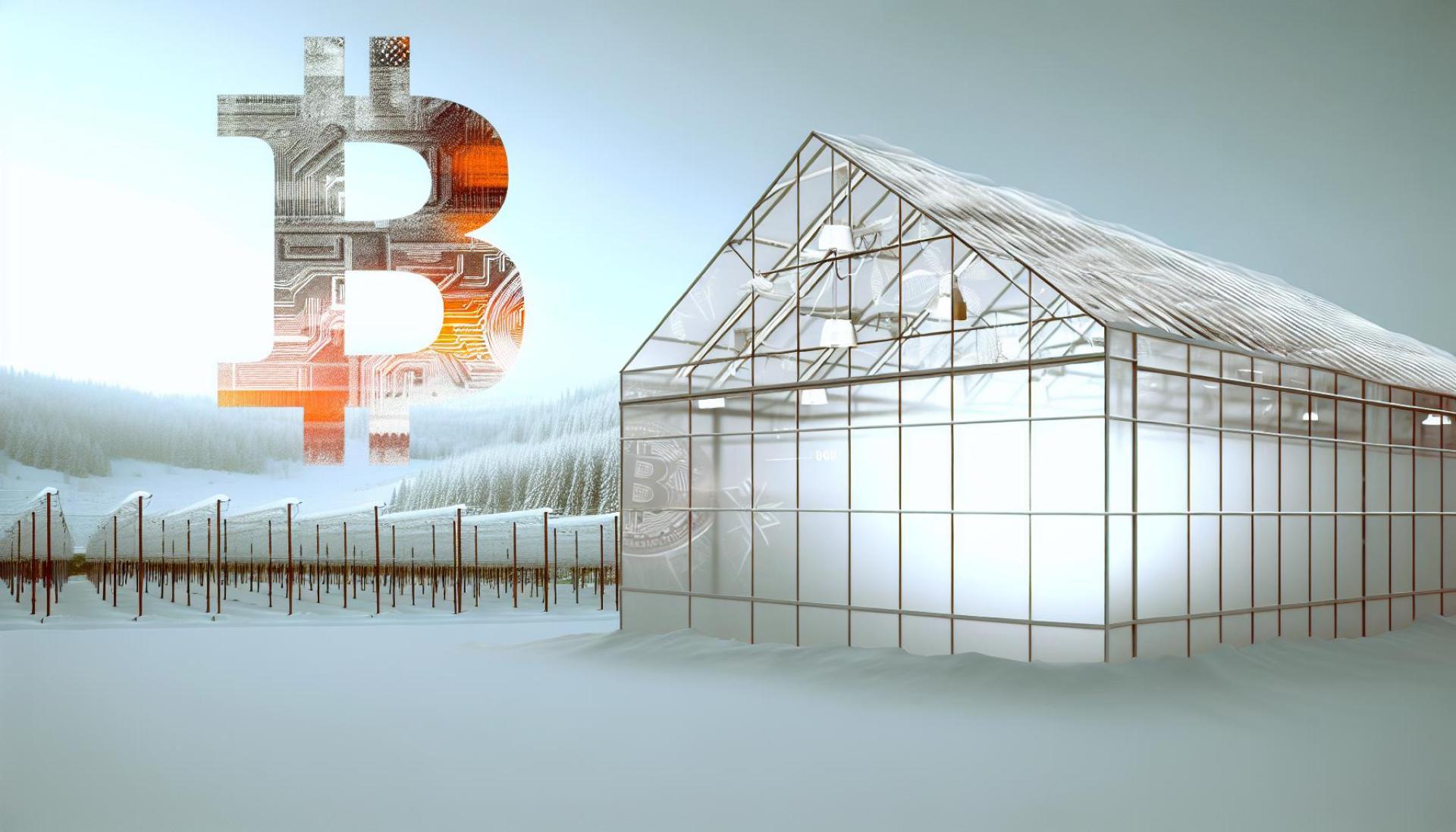
What are the benefits of using Bitcoin mining for greenhouse heating?
Turning Heat into Harvest: How Bitcoin Mining is Warming Canadian Greenhouses
Introduction: From Waste Heat to Real-World Yield
Bitcoin mining has long been criticized for its energy consumption, especially in colder climates where heating is already a major cost. Canada, with its long winters and strong agricultural sector, is turning that narrative on its head.
A new wave of projects is using Bitcoin mining waste heat to warm Canadian greenhouses, cutting energy costs, stabilizing crop production, and giving miners access to cheaper power and friendlier regulation. It’s a real-world example of how Bitcoin mining, energy markets, and agriculture can align in a mutually beneficial way.
This article explores how this model works, why it’s gaining traction in Canada, and what it means for the broader crypto and Web3 ecosystem.
How Bitcoin Mining Heat Reuse Works
The Core Idea: Mining as a Heat-First Business
Standard Bitcoin mining turns electricity into SHA-256 hashes, which in turn become heat. In most setups, that heat is a waste product. In a greenhouse, it becomes the primary product.
Basic flow:
- Electricity powers ASIC miners.
- ASICs convert electrical energy into computational work and heat.
- Heat is captured and redirected into greenhouse heating systems.
- Crops benefit from controlled temperatures and, in some cases, CO₂ enrichment.
- Miners earn BTC while growers reduce or even eliminate fossil-fuel heating.
Typical Technical Setup
A greenhouse-integrated mining operation usually includes:
- High-efficiency ASICs (e.g., Antminer S19 series or newer)
- Heat capture:
- Direct air ducting from miner exhaust
- Or liquid immersion cooling loops with heat exchangers
- Distribution inside greenhouse:
- Ductwork and fans to spread warm air
- Hydronic (water-based) systems using reclaimed heat
- Environmental controls:
- Temperature, humidity, and airflow sensors
- Automated systems to balance mining intensity and climate needs
| Component | Role in Greenhouse-Mining System |
|---|---|
| ASIC Miners | Generate hash power and heat |
| Heat Exchangers | Transfer heat to air or water loops |
| Ducts/Piping | Distribute heat through the greenhouse |
| Sensors & Controls | Maintain optimal crop conditions |
Why Canada Is a Hotspot for Bitcoin-Heated Greenhouses
Climate, Energy, and Agriculture Converge
Canada is uniquely positioned for Bitcoin-powered greenhouse heating:
- Cold climate: Long, harsh winters create heavy heating loads.
- Strong greenhouse sector: Especially in provinces like Ontario, Alberta, and British Columbia.
- Relatively cheap and clean power:
- Hydro in Quebec, British Columbia, Manitoba
- Natural gas and growing renewables in Alberta and Saskatchewan
When heating is one of the biggest costs for Canadian growers, a system that turns capex on miners into both BTC yield and thermal energy is compelling.
Economic Drivers for Miners and Growers
For miners:
- Access to lower effective power costs when heat is valued by the greenhouse.
- Improved public and regulatory perception via clear environmental and agricultural benefits.
- Potential for long-term offtake contracts with growers anchoring energy demand.
For greenhouse operators:
- Reduced or replaced:
- Natural gas or propane heating bills
- Carbon taxes associated with fossil fuels
- More stable year-round production, especially for:
- Tomatoes
- Peppers
- Leafy greens
- Specialty crops (e.g., herbs, flowers)
Case Studies: Bitcoin Mining Greenhouses in Canada
1. Small-Scale Rural Greenhouse Integration
Across rural Canada, especially in Prairie provinces, small mining operators are pairing a few dozen to a few hundred ASICs with:
- 200-2,000 m² greenhouses
- Mixed vegetable production
- Local farmer partnerships or owner-operated models
This model often uses air-cooled miners with ducted exhaust, keeping capex low and allowing:
- Local food production even in cold months
- Miners to remain profitable at lower BTC prices due to “double revenue” (heat + BTC)
2. Immersion-Cooled Systems for High-Value Crops
More advanced projects, including pilots in western Canada, are experimenting with:
- Immersion cooling: ASICs submerged in dielectric fluid
- Hydronic heating loops: Circulating warmed fluid through pipes under beds or along greenhouse walls
Benefits include:
- More stable temperatures (vital for sensitive crops)
- Quieter operations (fans largely eliminated)
- Higher ASIC lifespan and better overclocking potential
While capex is higher, immersion setups open doors for premium crops and tighter environmental control.
Technical and Regulatory Challenges
Managing Heat, Humidity, and Crop Health
Simply pumping hot ASIC exhaust into a greenhouse is not enough. Operators must manage:
- Humidity:
- ASIC heat can dry the air; greenhouses often need higher humidity.
- Solutions: misting systems, evaporative pads, or dynamic airflow control.
- Air quality and dust:
- Miners require clean, cool intake air.
- Greenhouses have high humidity and biological particles.
- Typical setup separates miner intake from greenhouse air and only uses exhaust for heating.
- Load balancing:
- Plant needs vary with time of day and season.
- Smart systems adjust:
- Number of active miners
- Fan speeds
- Heat distribution
Regulatory and Policy Considerations
Relevant Canadian factors include:
- Carbon pricing: Fossil-based heating is increasingly expensive; BTC-heat greenhouses can sidestep some costs where electricity is low-carbon.
- Zoning and building codes:
- Fire safety for electrical equipment
- Ventilation standards
- Grid constraints:
- Rural areas may have limited grid capacity.
- Hybrid models with behind-the-meter renewables (solar, wind, biogas) and mining are emerging as a solution.
For miners, partnering with agriculture gives a clear narrative to regulators: instead of “wasting energy,” they are co-producing food and digital assets.
Strategic Opportunities for Crypto and Web3 Builders
Business Models Emerging Around Bitcoin Mining Heat Reuse
Crypto-native entrepreneurs can tap into:
- Heat-as-a-Service (HaaS)
- Miners finance and operate hardware.
- Greenhouses pay a discounted fee versus traditional heating.
- BTC upside remains with the miner.
- Joint Ventures with Revenue Sharing
- Greenhouse and miner share:
- Capex on miners and infrastructure
- BTC revenue and energy savings
- Tokenized Infrastructure Financing
- Use tokens or on-chain instruments to:
- Crowdfund mining + greenhouse builds
- Share cash flows from BTC mined and produce sold
Data, IoT, and On-Chain Coordination
Web3 developers can build:
- On-chain monitoring of energy and yield:
- Token incentives tied to energy efficiency and crop output
- IoT-controlled mining intensity:
- Smart contracts or off-chain oracles adjust hash rate to match:
- Temperature setpoints
- Power prices
- Carbon intensity signals
- Green Bitcoin labeling:
- NFTs or attestations proving:
- Energy came from low-carbon sources
- Heat was reused in agriculture
- Potential basis for differentiated “green BTC” markets or reputational benefits
Conclusion: Rethinking Bitcoin’s Energy Story
Canada’s experiment with Bitcoin-heated greenhouses shows how mining can evolve from a pure financial game into a multi-layered infrastructure play:
- Miners get more resilient economics and better public perception.
- Growers get cheaper, more stable heat and improved year-round yields.
- The crypto ecosystem gets a real-world showcase of Bitcoin as a flexible, programmable energy sink that can be paired with critical industries.
As hardware efficiency improves and carbon policies tighten, models that turn mining into a heat-first, agriculture-backed business are likely to expand-first across cold-climate regions, then into any market where thermal loads and excess energy intersect.
For crypto builders, investors, and miners, this isn’t just about narrative. It’s a concrete, scalable path where hash power, kilowatts, and harvests all grow together.




