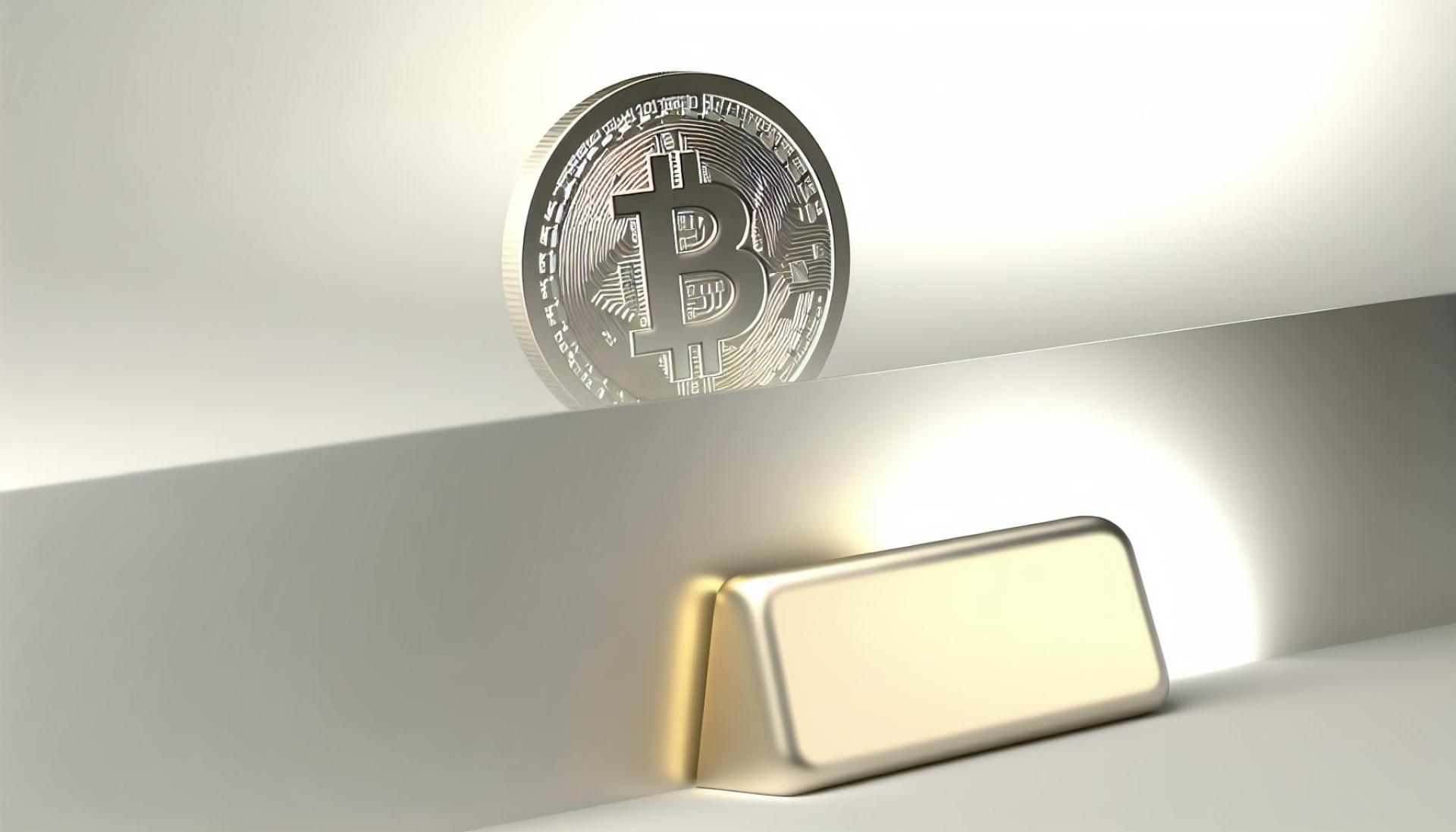
How has the performance of gold compared to Bitcoin in recent months?
Bitcoin Reaches 2021 Highs: Gold Plummets to Six-Week Lows Under $4.7K
Bitcoin’s price action is once again dominating macro headlines as it revisits levels last seen during the 2021 bull market, while gold has sharply corrected from recent peaks, trading back down toward six‑week lows under $4,700 per ounce in some key synthetic and derivative benchmarks. For crypto natives, this divergence between “digital gold” and traditional safe-haven assets is more than a price story-it’s a signal about changing market structure, liquidity, and where capital wants to live in a web3-driven future.
Below is a data-driven look at the Bitcoin-gold dynamic, what’s driving the moves, and what it may mean for crypto, DeFi, and blockchain adoption heading into 2025 and beyond.
Bitcoin Returns to 2021 Highs: Macro, ETFs, and On‑Chain Drivers
Bitcoin reclaiming its 2021 highs is not just a psychological milestone; it reflects a new market regime powered by spot ETFs, institutional flows, and maturing crypto infrastructure.
Key drivers behind Bitcoin’s surge
- Spot Bitcoin ETFs and institutional flows
- US‑listed spot Bitcoin ETFs have attracted sustained inflows from RIAs, family offices, and hedge funds.
- Regulated wrappers lowered friction for traditional capital to gain BTC exposure.
- Growing AUM in these vehicles has tightened available supply on exchanges.
- Halving narrative and supply shock
- The most recent Bitcoin halving cut block rewards again, reducing new BTC issuance.
- With strong ETF demand and a slower pace of new supply, even modest inflows can move price aggressively.
- Historically, halvings have preceded multi‑month bull cycles.
- On‑chain data confirming accumulation
- Long‑term holder supply remains near all‑time highs, indicating conviction among “diamond hands.”
- Exchange balances continue to trend down, suggesting BTC is migrating to cold storage and DeFi collateral rather than staying tradable on CEXs.
- Network fees and active addresses have recovered, reflecting revived on‑chain activity-both monetary transfers and L2/ordinal‑related usage.
Snapshot: Bitcoin market metrics
| Metric | Trend (2024-2025) |
|---|---|
| Price vs. 2021 ATH | Re-testing 2021 high zone |
| Spot ETF Flows | Net positive over multi-month window |
| Exchange Balances | Downtrend, multi-year lows |
| Long-Term Holder Supply | Near record highs |
For builders and traders in crypto, this backdrop creates a powerful feedback loop: higher prices drive more liquidity, which fuels more experimentation in DeFi, NFTs, and web3 infra.
Gold Plummets to Six‑Week Lows Under $4.7K: A Changing Safe-Haven Play
While Bitcoin challenges old highs, gold has pulled back sharply from its own peak, with some synthetic benchmarks and tokenized representations slipping under $4,700 per ounce equivalent after hitting record territory earlier in the year.
Why is gold under pressure?
Several overlapping forces have weighed on gold in late 2024 and early 2025:
- Profit-taking after record highs
Traders and funds that rode gold’s move up have been booking profits, especially as volatility in FX and rates markets intensified.
- Shifting expectations for interest rates
- If markets price in “higher for longer” or slower rate cuts, carry on cash and short‑duration bonds becomes more attractive.
- Non‑yielding gold competes poorly with safer assets when real yields are rising or stable at elevated levels.
- Relative appeal of digital assets
- Younger investors and tech-forward capital increasingly favor Bitcoin and Ethereum as macro hedges or “risk-on safe havens,” especially during liquidity expansions.
- Tokenized gold (e.g., PAXG equivalents, on-chain gold indexes) still sees adoption, but the narrative energy has shifted toward crypto-native stores of value.
Gold vs. Bitcoin: contrasting profiles
| Asset | Key Use Case | Yield / Utility | Storage & Transfer |
|---|---|---|---|
| Gold | Traditional inflation hedge, reserve asset | Typically 0% (unless leased or structured) | Physical custody, slower transfer, higher friction |
| Bitcoin | Digital store of value, collateral, settlement asset | On-chain yield via DeFi and CeFi structures | Instant, global, programmable settlement |
From a web3 vantage point, the most important difference is programmability: Bitcoin can be wrapped, bridged, and integrated into DeFi protocols in ways physical gold cannot.
Bitcoin vs. Gold: The “Digital Gold” Thesis in 2025
The simultaneous rally in BTC and correction in gold is renewing debate about whether Bitcoin has truly matured into “digital gold”-or whether the two assets now respond to different macro narratives.
Correlations and macro narratives
- Decoupling from legacy hedges
- Historically, BTC has shown bursts of correlation with risk assets (equities, tech stocks) rather than behaving like a pure safe haven.
- However, in high‑liquidity environments, Bitcoin often front‑runs risk sentiment shifts, acting as a kind of “liquidity barometer.”
- Digital gold vs. tech‑beta hybrid
- On longer timeframes, BTC’s supply cap and halvings support a digital scarcity narrative.
- On shorter timeframes, derivatives leverage and speculative positioning mean it can still trade like a high‑beta tech asset.
Why crypto natives are choosing BTC over gold
For investors steeped in blockchain and DeFi:
- Programmable collateral
- BTC can be tokenized and used as collateral on DeFi protocols, in cross‑margin systems, and within on‑chain money markets.
- Gold generally enters crypto only through centralized tokenized wrappers, losing some of its censorship‑resistance and self‑custody advantages.
- Composability and L2 scaling
- Bitcoin’s ecosystem is gradually leveraging sidechains, rollups, and interoperability solutions, turning BTC into a more composable settlement asset.
- Gold has no native web3 rails; its composability is entirely derivative.
- Cultural and demographic shift
- Web3 builders, DAOs, and crypto funds overwhelmingly denominate performance and treasuries in BTC, ETH, or stablecoins-not gold.
- This cultural anchoring matters for long-term flows and reflexivity.
Implications for DeFi, Web3 Treasuries, and Tokenization
The Bitcoin-gold divergence carries tangible consequences for protocol design, treasury strategy, and on‑chain financial products.
1. DeFi collateral and risk management
- Protocols are increasingly:
- Raising BTC collateral caps.
- Introducing BTC‑settled derivatives (perps, options, structured products).
- Designing multi‑collateral systems that treat BTC as a base-layer reserve asset.
- Risk teams are focusing on:
- On‑chain liquidity depth for BTC pairs.
- Oracle robustness across CEX and DEX venues.
- Cross‑chain bridge security for wrapped BTC assets.
2. DAO and project treasuries
Projects managing multi‑year runways are reconsidering allocations:
- Typical treasury mix is shifting toward:
- BTC and ETH as long‑duration “reserve” assets.
- Stablecoins for operating expenses and near‑term liabilities.
- Smaller allocations to L1/L2 ecosystem tokens.
- Gold‑backed tokens remain niche, often used for:
- Region-specific regulatory constraints.
- Users who want tradable gold exposure without leaving web3.
3. Tokenized real‑world assets (RWAs)
The pullback in gold comes even as RWA tokenization trends up:
- On‑chain representations of:
- Short‑term US Treasuries
- Money‑market style funds
- Corporate credit and real estate
are gaining traction, often overshadowing tokenized metals.
For builders, this opens doors to hybrid products:
- BTC + RWA vaults
- Yield‑bearing BTC strategies using tokenized fixed income
- Structured vaults hedging BTC exposure with on‑chain options and RWAs rather than gold
Conclusion: Bitcoin’s Resurgence and the Future of Digital Stores of Value
Bitcoin revisiting its 2021 highs while gold sinks back to six‑week lows under $4.7K reflects more than a shifting macro mood-it highlights a structural migration of capital and narrative from physical to digital scarcity.
For the crypto and blockchain ecosystem, this environment:
- Strengthens Bitcoin’s role as programmatically scarce, globally transferable collateral.
- Undermines gold’s exclusivity as a macro hedge, especially among digitally native investors.
- Accelerates demand for on‑chain financial infrastructure, from DeFi money markets to RWA platforms.
As 2025 unfolds, the critical questions for web3 participants will be:
- How deeply will BTC be integrated into multi‑chain DeFi and institutional rails?
- Will tokenized gold and other RWAs evolve enough to compete with crypto‑native assets on utility, not just narrative?
- Can Bitcoin maintain its “digital gold” status while still behaving like a high‑beta asset in risk‑on markets?
For now, price action is clear: capital is voting with its feet, and it is increasingly walking onto the blockchain.