
How does the incident affect Bitcoin mining operations in New York?
Fire Erupts at Greenidge Mining Facility Housing NYDIG Rigs: What You Need to Know
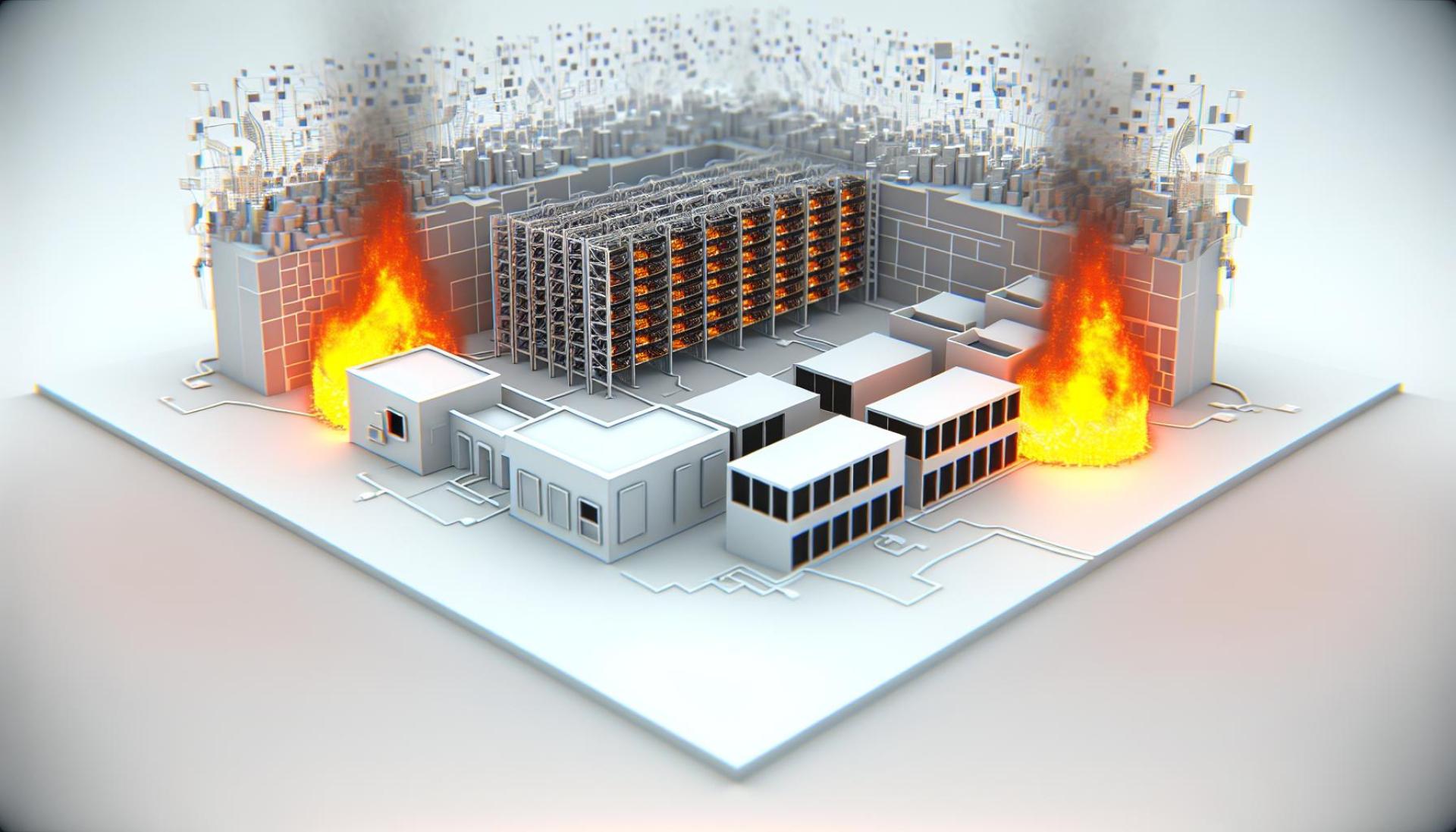
A reported fire at the Greenidge Generation Bitcoin mining facility in New York-where NYDIG-owned rigs have been hosted under prior arrangements-has sparked fresh questions about operational risk, uptime, and regulatory scrutiny in U.S. mining. Here’s what crypto miners, investors, and web3 builders should watch as details emerge.
What Happened at the Greenidge Bitcoin Mining Facility?
As of publication, public details on the incident’s cause, scope, and downtime are limited and subject to official confirmation. Industry chatter indicates the fire affected at least part of the mining operation that has hosted NYDIG-owned machines under restructuring and hosting agreements initiated in late 2022-2023. Exact hashrate impact, damage assessment, and repair timelines have not been formally disclosed.
Readers should monitor official statements from Greenidge Generation, NYDIG, local authorities in Yates County, and any SEC filings (e.g., 8-K) for verified updates.
Greenidge and NYDIG: Who’s Who
- Greenidge Generation: A natural-gas power plant turned Bitcoin miner with operations in Dresden, NY, and expansion/hosting activity outside New York. The facility has faced sustained environmental and permitting scrutiny in the state.
- NYDIG: A Bitcoin-focused financial and technology firm providing custody, financing, mining services, and institutional infrastructure. In 2022-2023, NYDIG entered agreements with Greenidge involving debt restructuring and hosting of NYDIG-owned rigs.
Potential Impact on Bitcoin Hashrate, Difficulty, and Fees
Unless multiple large facilities are affected simultaneously, the Bitcoin network’s security and transaction processing remain resilient. A single-site outage typically has a limited, short-term impact on global hashrate and is usually absorbed by the next difficulty adjustment.
- Local downtime: The operator’s production drops; pool statistics may reflect a temporary dip.
- Network effect: Minimal unless the offline capacity is a significant share of total network hashrate.
- Fees: Transaction fees are driven by mempool demand; a localized mining interruption rarely shifts fee markets by itself.
Illustrative note: A 20-30 MW wing equipped with modern ASICs could represent a fraction of an exahash per second. Actual capacity affected in this incident remains unconfirmed.
| Stakeholder | Immediate Risk | What to Monitor |
|---|---|---|
| Greenidge | Operational downtime; repair capex; insurance claims | Press releases, power/hosting status, insurance coverage, repair timeline |
| NYDIG | Hosted hashrate loss; equipment damage | Asset recoveries, redeployment plans, counterparty updates |
| Miners/Investors | Revenue variance; pool payout fluctuations | Pool stats, difficulty changes, fleet allocation |
| Local Community | Safety, environmental concerns | Authorities’ reports, environmental testing, regulatory responses |
Mining Facility Fires: Root Causes and How Operators Mitigate
High-density compute, power electronics, and airflow make data-center-style mining farms vulnerable to certain failure modes. Leading operators use layered controls to lower risk and insurer exposure.
Common Triggers
- Electrical faults: busways, PDUs, PSUs, or improper cable terminations
- Thermal hotspots: dust-clogged filters, unbalanced airflow, failed fans
- Overcurrent/overvoltage events and subpar breakers
- Human error during maintenance or hot-swaps
Best-Practice Mitigations
- Compartmentalization: fire-rated zones to limit lateral spread
- Detection: particulate early warning systems and thermal cameras
- Suppression: clean-agent systems (e.g., FK-5-1-12/Novec 1230, inert gas) where water could damage equipment; wet sprinklers in ancillary areas
- Electrical hygiene: IR thermography, torque audits, and scheduled breaker testing
- Airflow and filtration: hot/cold-aisle containment and strict dust control
- Immersion cooling: reduces airborne dust and fan failures; can lower fire risk at the rack level
- Operational SOPs: LOTO procedures, change management, and rapid isolation of affected circuits
Regulatory and ESG Context in New York
New York has been a focal point for proof-of-work mining oversight. A 2022 state law established a two-year moratorium for certain new/renewed air permits for fossil-fuel-powered PoW mining at repurposed plants. While that moratorium period has lapsed, regulatory scrutiny remains elevated, particularly around emissions, noise, and local environmental impacts. Any incident at a high-profile site can influence public perception and oversight intensity.
What Crypto Stakeholders Should Do Now
- Watch official channels: Greenidge, NYDIG, local authorities, and SEC filings for verified facts.
- Track hashrate data: Pool dashboards and public network metrics for any measurable dip.
- Assess counterparty exposure: Hosting clients and lenders should review SLAs, insurance, and redeployment options.
- Stress-test operations: Revisit fire safety, maintenance cadence, and incident response playbooks across your own sites.
- Communicate transparently: Clear updates maintain credibility with investors, partners, and communities.
Conclusion
The reported fire at Greenidge’s mining facility-home to NYDIG-hosted rigs under prior agreements-underscores that web3 infrastructure is still industrial infrastructure. For miners and investors, the immediate priority is verification: scope of damage, safety outcomes, and time to restore hashrate. For the broader Bitcoin ecosystem, the network remains resilient, but operators should treat this as a prompt to harden facilities, review insurance and SLAs, and communicate proactively as facts are confirmed.