What role does Chainalysis play in analyzing cryptocurrency trends in Iran?
Iran’s Crypto Ecosystem Surges to $7.8B Amid Protests: Insights from Chainalysis
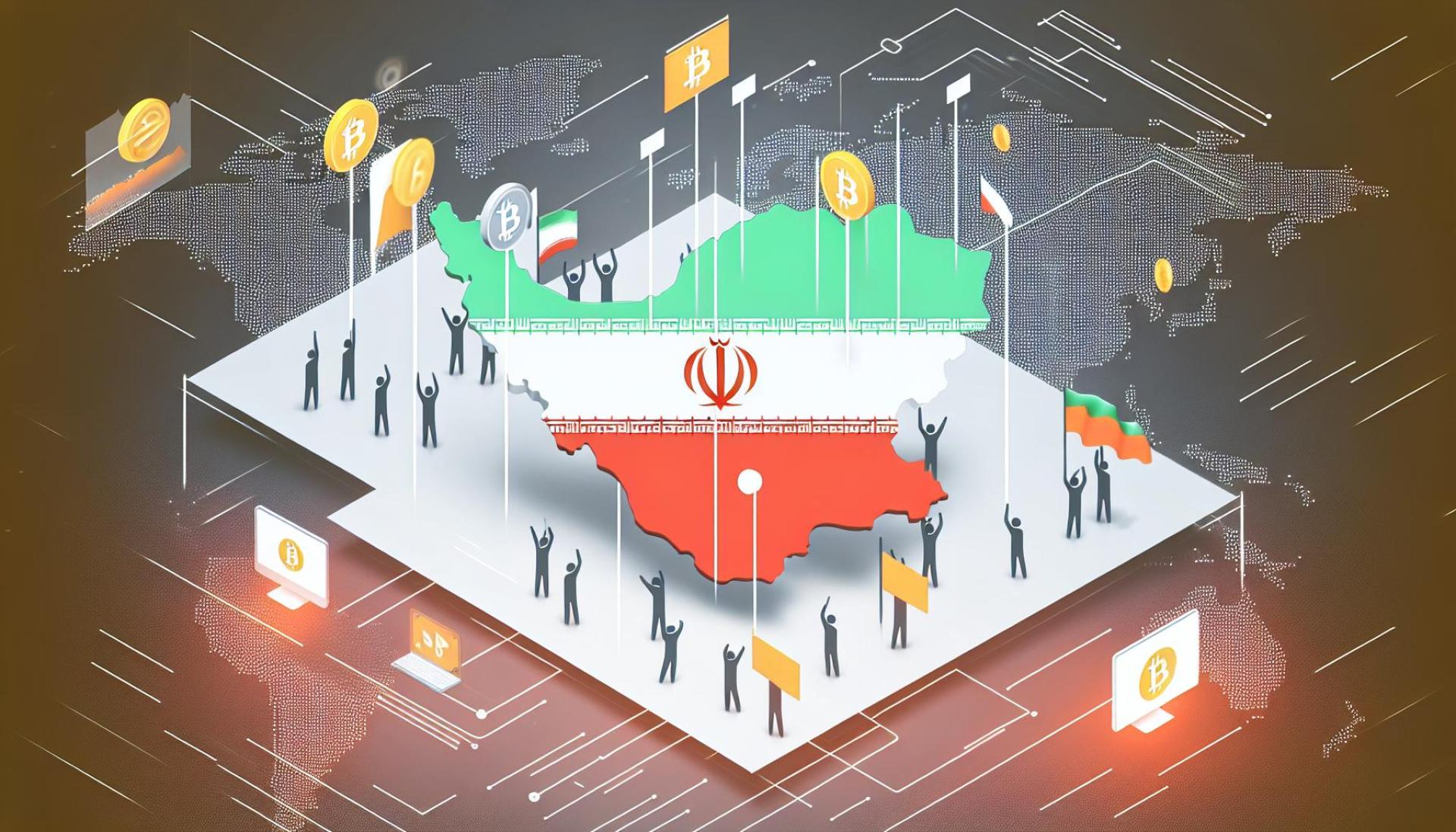
Iran’s crypto economy has quietly become one of the most consequential in the Middle East. According to Chainalysis estimates, Iran’s crypto ecosystem has grown to roughly $7.8 billion in transaction volume, even as the country faces sanctions, economic strain, and recurring waves of protest. For crypto-native readers, Iran is a case study in how digital assets evolve under pressure: capital controls, censorship, and high geopolitical risk.
This article unpacks the data and dynamics behind Iran’s on-chain activity, drawing on Chainalysis research and other public sources up to 2025.
Iran’s Crypto Growth in Context: Sanctions, Inflation, and Digital Escape Hatches
Crypto adoption in Iran is not driven by speculation alone. It sits at the intersection of economic necessity and geopolitical constraints.
Macroeconomic Drivers of Iran’s Crypto Surge
Several overlapping forces help explain the $7.8B crypto footprint:
- Sanctions and financial isolation
- Limited access to the global banking system (SWIFT restrictions).
- Difficulty for businesses and individuals to transact cross-border.
- High and persistent inflation
- Rial devaluation has pushed citizens toward dollar proxies and quasi-hard money.
- Stablecoins and BTC are attractive as value reservoirs.
- Capital controls and FX restrictions
- Strict regulation of foreign currency flows encourages parallel and informal channels.
- Digital-native, young population
- Strong baseline technical literacy.
- Widespread use of VPNs and censorship-circumvention tools.
In this environment, crypto is both a hedge and a routing layer around traditional finance.
What Chainalysis Data Reveals About Iran’s On‑Chain Activity
Chainalysis has repeatedly highlighted Iran as a high-intensity jurisdiction for crypto usage, particularly in P2P markets, mining, and sanctions-related risk. While exact Chainalysis charts are proprietary, several recurring themes emerge.
Transaction Patterns: Who Uses Crypto and How?
On-chain flows suggest three broad user segments:
- Retail and small-scale users
- Convert rial to BTC, USDT, and other stablecoins.
- Use local OTC dealers and P2P platforms (often via Telegram and local exchanges).
- SMEs and traders
- Settle imports/exports via crypto when banking rails are blocked.
- Use intermediaries in Turkey, UAE, and other regional hubs.
- State-linked and gray-market actors
- Engage in mining and cross-border settlement.
- Use crypto to mitigate sanctions impact, according to multiple investigative reports.
A simplified view of transaction types might look like this:
| Category | Share of Activity (Indicative) | Primary Assets |
|---|---|---|
| Retail hedging & savings | 30-40% | BTC, USDT, TRC-20 stablecoins |
| Trading & speculation | 25-35% | BTC, ETH, altcoins |
| Cross-border settlement | 20-30% | USDT, USDC, BTC |
| Mining-related flows | 5-10% | BTC, ETH (up to the Merge), various |
Note: Percentages are directional, based on regional patterns highlighted by Chainalysis and other analytics firms; exact numbers for Iran specifically are not fully public.
Protocol and Asset Preferences
- Bitcoin (BTC) remains a core asset, especially for long-term holding and large-value transfers.
- Tether (USDT), particularly on Tron (TRC‑20), is widely used due to:
- Low fees.
- Ease of access via regional OTC networks.
- Altcoins and DeFi play a secondary role:
- Some Iranians interact with major DeFi protocols (Uniswap, Curve, etc.) via VPNs.
- DeFi usage is visible but not dominant compared to centralized and OTC flows.
Crypto as a Tool in Times of Protest and Censorship
Iran has seen repeated waves of protest, most notably the 2019 fuel price protests and the 2022-2023 “Woman, Life, Freedom” movement. During such periods, the state often responds with internet throttling, platform blocking, and financial surveillance.
How Activists and Citizens Use Crypto Under Pressure
In these protest cycles, crypto has served several roles:
- Cross-border donations
- Diaspora communities send crypto to support activists, NGOs, and families.
- BTC, ETH, and stablecoins used to bypass banking scrutiny.
- Censorship-resistant payments
- Alternative rails when local payment processors restrict politically sensitive campaigns.
- Wealth preservation amid uncertainty
- During acute crackdowns, some citizens move savings into crypto to hedge against:
- Asset freezes.
- Bank closures or withdrawal limits.
- Rapid currency declines.
However, usage is not without risks:
- Chain surveillance and KYC’d exchanges can expose identities.
- Local OTC desks may be monitored or infiltrated.
- Holding private keys securely is a non-trivial challenge for non-technical users.
Mining, Sanctions, and the State: Iran’s Strategic Crypto Play
One of the most distinctive aspects of Iran’s crypto landscape is Bitcoin mining. The country’s subsidized electricity and energy surplus at times have made mining strategically attractive.
Evolution of Iran’s Bitcoin Mining Industry
- 2019-2021: Expansion and Regulation
- Government recognized mining as an industry.
- Licensed mining farms emerged, often with access to cheap power.
- Some reports suggested Iran accounted for several percent of global BTC hash rate at its peak.
- 2021-2023: Crackdowns and Intermittent Bans
- Power shortages and blackouts led to seasonal or temporary bans.
- Authorities targeted unlicensed farms and seized hardware.
- 2023-2025: More Selective, Still Active
- Mining continues, but increasingly concentrated among:
- State-adjacent entities.
- Large, better-capitalized operations.
- Mining revenue is widely believed to play a role in:
- Generating hard-currency equivalents.
- Facilitating sanctioned trade via BTC.
For web3 builders, Iran’s mining story underscores how energy policy, sanctions, and crypto economics can intersect in complex ways.
Regulatory Environment and Compliance Risks for Global Crypto Firms
For exchanges, DeFi protocols, and analytics providers, Iran is a high-stakes compliance theater.
Key Regulatory and Compliance Considerations
- OFAC and U.S./EU Sanctions
- Direct dealings with Iranian entities generally prohibited under U.S. sanctions.
- OFAC has previously sanctioned:
- Iran-based exchanges.
- Individuals and services involved in ransomware, money laundering, or sanctions evasion.
- Exchange Responses
- Major centralized exchanges:
- Block Iranian IPs.
- Enforce KYC/AML screens against Iranian documents.
- Users often circumvent via VPNs and intermediaries, but risk account freezes and asset seizures.
- DeFi and Protocol-Level Questions
- Permissionless protocols technically open, but:
- Frontends may geoblock Iranian IPs.
- Some projects integrate sanctions screening (e.g., OFAC lists) at the UI or compliance layer.
- Analytics and Risk Scoring
- Chainalysis and peers flag:
- High-risk services (mixers, unlicensed exchanges, darknet markets).
- Patterns associated with sanctioned jurisdictions.
For builders and DAOs, Iran poses a critical question: How to reconcile open, borderless protocols with jurisdiction-specific legal risk?
Strategic Takeaways for the Crypto and Web3 Community
Iran’s $7.8B crypto ecosystem offers several broader lessons:
- Crypto thrives where traditional finance fails. High inflation, sanctions, and censorship reliably push adoption, though not always in ways aligned with crypto’s idealistic narratives.
- Stablecoins are the real “killer app” under stress. In Iran, as in other emerging markets, USDT and other stables often matter more day-to-day than DeFi yield strategies or NFTs.
- Regulation shapes on-chain geography. Sanctions pressure doesn’t kill activity; it re-routes it through P2P channels, OTC brokers, and more opaque networks.
- Mining is a geopolitical instrument. In energy-rich, sanctioned states, BTC mining acts as a monetization layer over energy exports that might otherwise be stranded.
Conclusion: Iran as a Case Study in Adversarial Crypto Adoption
Iran’s crypto surge to an estimated $7.8B in annual transaction volume demonstrates what happens when a population faces currency instability, financial isolation, and political unrest at the same time. For many Iranians, crypto is not just an investment thesis-it is an escape valve, a funding mechanism, and a survival tool.
For the broader crypto and web3 ecosystem, Iran underscores the dual nature of blockchain technology: a powerful force for financial empowerment, and a complex challenge for regulators and compliance teams. As the space matures, Iran will remain one of the most important-and most scrutinized-examples of crypto operating at the frontier of geopolitics, human rights, and decentralized finance.