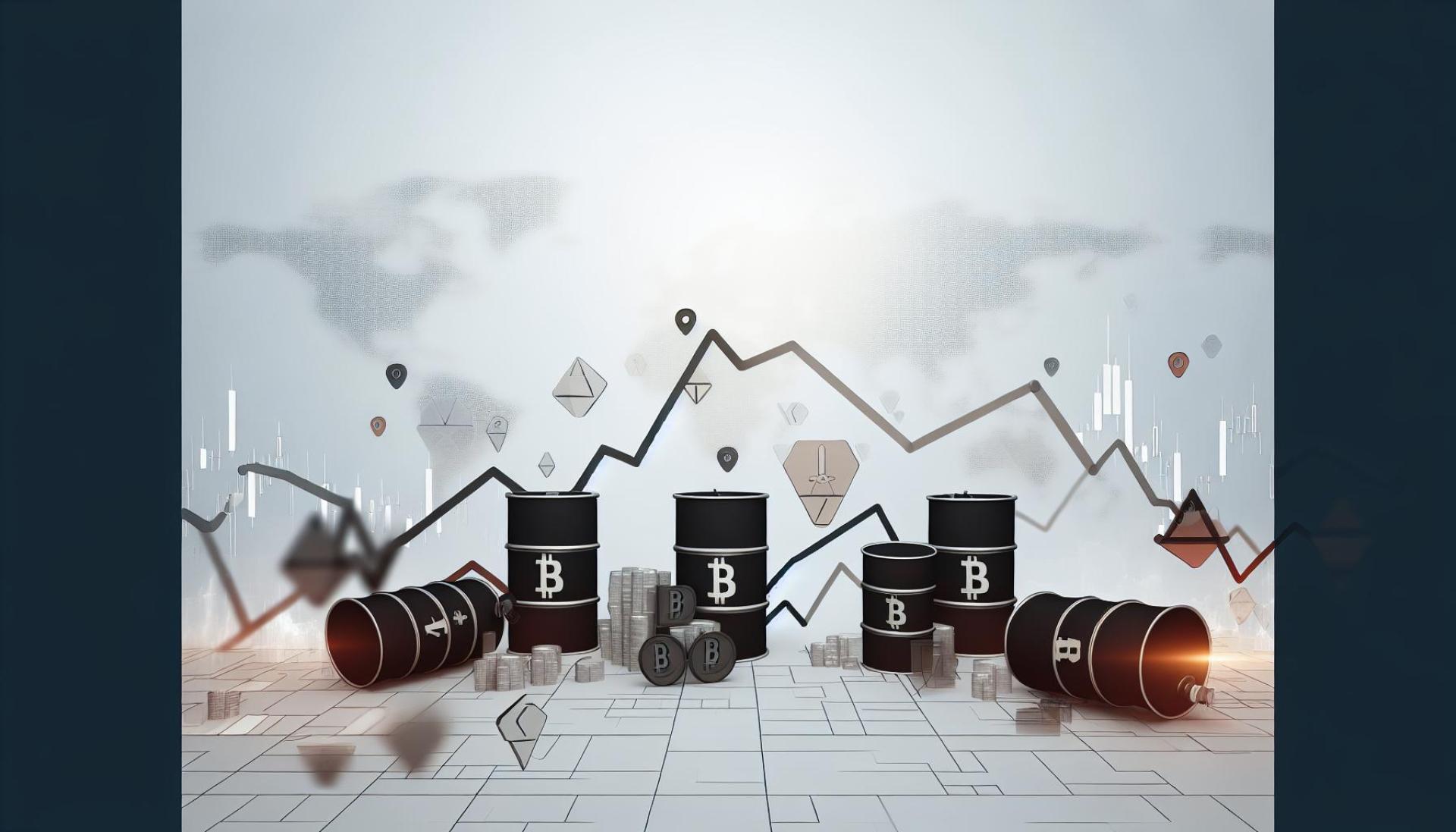
What are the reasons behind the recent surge in cryptocurrency values?
Oil Plummets, Crypto Surges: Trump’s Mixed Signals on Iran War Shake Markets
Introduction: Geopolitics, Trump, and a New Macro Regime for Crypto
Donald Trump’s return to the White House in 2025 has re-introduced a familiar variable to global markets: unpredictable geopolitical messaging. His shifting signals on potential conflict with Iran-oscillating between harsh rhetoric and calls for restraint-have fueled sharp moves in traditional assets while driving renewed interest in cryptocurrencies.
Oil prices have dropped after an initial spike, while crypto markets, particularly Bitcoin and select large-cap altcoins, have surged as investors seek alternative hedges. For a crypto and blockchain audience, this is not just a macro headline-it’s a live stress test of crypto’s role in a volatile, politically charged world.
How Iran War Fears Hit Oil but Boosted Bitcoin
From Oil Shock to Oil Slump
Initial fears of a U.S.-Iran conflict briefly pushed crude prices higher in early 2025. But as Trump’s administration signaled both:
- Tough sanctions,
- Sporadic talk of “decisive action,” and
- Periodic tweets and statements downplaying imminent war,
markets began to price in uncertainty rather than a full-scale conflict. That uncertainty, combined with:
- Tepid global growth projections,
- Strong U.S. shale production capacity, and
- OPEC+ fragmentation,
has led to a plunge in oil prices from their geopolitical-risk premium levels.
A simplified snapshot:
| Asset | Trend (2025 YTD) | Key Driver |
|---|---|---|
| Crude Oil | Down from war-scare highs | Demand concerns, no full-scale war |
| Bitcoin | Strong uptrend | Macro hedge, risk-on flows |
| ETH & majors | Moderate to strong gains | Liquidity rotation, DeFi activity |
Why Crypto Is Rallying While Oil Sinks
While commodities digest lower growth expectations, crypto is benefitting from a different set of dynamics:
- Macro hedge narrative: Bitcoin is again framed as “digital gold” amid geopolitical instability and rising sovereign debt levels.
- Dollar and rate expectations: Hints from the Fed and global central banks of more accommodative stances, given geopolitical risk, support risk assets including crypto.
- Capital mobility: In regions directly exposed to Iran tensions, some investors view crypto as a censorship-resistant way to preserve or move capital.
- Speculative rotation: With oil and some equities under pressure, traders chase momentum in crypto markets.
Trump’s Mixed Signals and Market Psychology in Web3
Policy by Tweet: Volatility as a Feature
Trump’s communications strategy-public rallies, social media blasts, and off-the-cuff statements-creates micro-cycles of fear and relief:
- Hawkish commentary → risk-off in stocks, short-term spike in oil, rotation into safe havens (gold, BTC).
- Dovish or ambiguous follow-ups → partial rebound in equities, oil fades, but crypto often retains gains as longer-term uncertainty persists.
For web3 participants, this volatility has several implications:
- Increased trading volumes on centralized exchanges and DEXs.
- Higher derivatives activity, including BTC and ETH futures and options tied to geopolitical event risk.
- More attention to on-chain stablecoin flows, as they can reveal where capital is moving in response to geopolitical stress.
Narrative Reflexivity: Crypto as a Geopolitical Asset Class
Crypto’s market structure amplifies narratives:
- “Iran tensions” + “Trump unpredictability” + “oil slump” becomes a macro story.
- Influential traders and analysts on X, Telegram, and Discord spin this into “Bitcoin as geopolitical hedge,” which then:
- Attracts more flows,
- Draws more media attention,
- Reinforces the narrative.
This is classic reflexivity-but now happening on-chain, visible in:
- Rising BTC dominance during risk-off headlines.
- Spikes in stablecoin issuance/redemptions indexed to geopolitical news cycles.
- Migration of liquidity toward L1s and L2s favored by active traders.
DeFi, Stablecoins, and On-Chain Safe Havens
Stablecoins in a Sanctions-Heavy World
Sanctions and financial restrictions are central to U.S. strategy on Iran. For crypto-native users, this raises critical questions about stablecoins and financial sovereignty:
- USDC and USDT issuers can and do comply with sanctions, including address blacklists.
- Crypto users in sanctioned or high-risk jurisdictions may pivot toward:
- Fully decentralized stablecoins,
- Privacy-preserving payment rails,
- Non-custodial wallets and DEXs.
Key on-chain trends to watch:
- Growth of crypto-collateralized stablecoins (e.g., DAI-like models).
- Experiments with algorithmic or synthetic FX tokens not dependent on U.S.-based issuers.
- Increased use of cross-chain bridges to route around localized liquidity constraints (with corresponding security risks).
DeFi Markets React to Geopolitical Risk
DeFi money markets and derivatives protocols price risk differently than TradFi:
- Borrowing rates on stablecoins can spike as traders leverage long BTC/ETH in macro-driven rallies.
- On-chain perps and options see volume surges around major Trump-Iran news events.
- Liquidity mining incentives may be adjusted by protocols to anchor liquidity during volatility.
For DeFi users:
- Monitor funding rates and on-chain yields; they often front-run or exaggerate TradFi sentiment.
- Track oracle sourcing and latency, as unreliable price feeds during news shocks can lead to liquidations and bad debt.
Investment and Risk Strategy for Crypto Users in a Trump-Iran Macro Era
1. Treat Geopolitical Risk as a Core Input
Crypto is no longer decoupled from macro. For traders and long-term web3 builders:
- Incorporate geopolitical calendars (elections, sanctions announcements, military escalations) into your strategy.
- Backtest how your portfolio performed during prior shocks (2019-2020 U.S.-Iran tensions, Russia-Ukraine war, 2020 COVID crash, 2022-2023 rate hikes).
2. Diversify Across Crypto Sectors
To manage regime shifts:
- Hold exposure to:
- Store-of-value assets: BTC, high-liquidity L1s.
- Yield-generating DeFi positions: Blue-chip lending, liquid staking.
- Infrastructure plays: Oracles, bridges, L2 scaling solutions.
- Consider scenario planning:
- Escalation scenario: BTC, privacy tools, decentralized stablecoins outperform.
- De-escalation / risk-on: ETH, DeFi, and web3 gaming/NFT infrastructure may lead.
3. Manage Custodial and Jurisdictional Risk
In a sanction-heavy environment:
- Prefer self-custody and non-custodial tools where legally permitted.
- Understand the regulatory exposure of centralized exchanges you use.
- Be aware that major stablecoin issuers are embedded in the U.S. financial system and subject to policy shifts under the Trump administration.
Conclusion: Crypto at the Crossroads of Oil, War, and Policy
The 2025 landscape-oil prices falling from war-scare highs, crypto surging on macro uncertainty, and Trump sending mixed messages on Iran-illustrates how deeply intertwined web3 has become with global geopolitics.
For the crypto and blockchain community, this moment is both:
- A stress test of Bitcoin’s hedge narrative, DeFi’s resilience, and stablecoins’ political neutrality; and
- An opportunity to build more censorship-resistant, globally accessible financial infrastructure.
As Trump’s Iran policy and broader foreign agenda evolve, expect more volatility-but also more validation that crypto is no longer a niche asset class. It is part of the macro conversation, shaped by oil prices, war probabilities, and the unpredictable politics of the world’s largest economy.