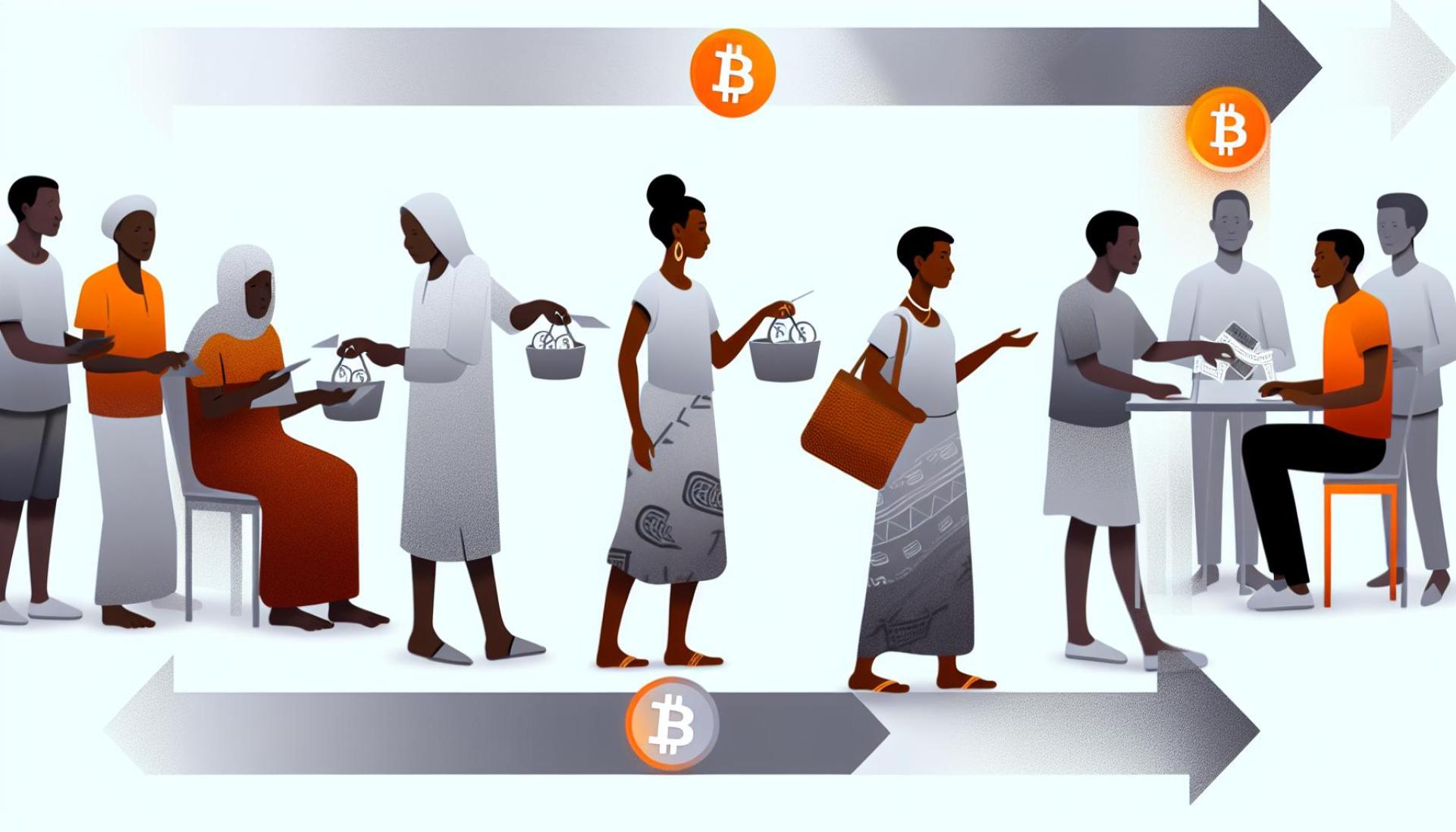
– How does the volatility of Bitcoin compare to that of the dollar in African markets?
Why Locals in Africa Favor Satoshis Over Dollars: Insights from Bitcoin Chair Stafford Masie
Africa is quietly emerging as one of the most important regions for Bitcoin adoption. On-the-ground behavior is revealing a pattern that many Western observers miss: everyday users don’t care about “owning one whole Bitcoin” or trading in dollars-they care about satoshis (sats), the smallest unit of Bitcoin.
South African tech leader and former Google SA country manager, Stafford Masie, now Chair of Bitcoin Ekasi and a prominent Bitcoin advocate, has repeatedly highlighted this shift: in many African communities, people increasingly think in sats, not dollars, as they integrate Bitcoin into daily life.
This article explores why locals in Africa favor sats over dollars, what that means for crypto and web3 builders, and how this trend is reshaping Bitcoin’s narrative from speculation to survival.
Bitcoin in Africa: Context and Key Drivers
Why Africa is a Real-World Bitcoin Laboratory
Unlike many Western markets where Bitcoin is primarily an investment asset, in much of Africa it is:
- A payment rail
- A store of value against inflation
- A cross-border tool for remittances and trade
- A financial inclusion gateway for the unbanked
Key macro conditions driving this:
- High inflation in countries like Nigeria, Ghana, and Zimbabwe
- Capital controls and FX shortages
- Weak banking access in rural regions
- Mobile-first populations comfortable with digital wallets
As Stafford Masie and other African Bitcoin educators describe it, people don’t adopt Bitcoin because it’s “cool tech”; they adopt it because the existing money is broken.
Why Satoshis Make More Sense Than Dollars on the Ground
Unit Bias: “I Can’t Afford One Bitcoin”
For many first-time users, seeing Bitcoin priced in dollars is alienating:
- 1 BTC ≈ tens of thousands of USD
- Monthly income may be less than 200-500 USD
- The idea of “owning 0.0003 BTC” feels meaningless
Masie and other educators emphasize unit bias: people prefer whole, intuitive numbers. In African townships, it’s far easier to say:
- “Send me 5,000 sats” than
- “Send me 0.00005000 BTC”
This reframing from BTC to sats turns Bitcoin from a “rich person’s asset” into everyday money.
Sats Map Better to Local Price Levels
Sats allow pricing at a scale that aligns with local incomes:
| Item | Price in Local Fiat | Approx. Sats (Example) |
|---|---|---|
| Street food meal | ~$1.50 | ~5,000 sats |
| Mobile data bundle | ~$3.00 | ~10,000 sats |
| Taxi ride (short) | ~$0.75 | ~2,500 sats |
(Exact sat values vary with price, but the order of magnitude stays intuitive.)
When a vendor in a township café says “your coffee is 2,000 sats,” it feels native and granular, not abstract.
Bitcoin vs Dollars in Africa: Why USD Isn’t the Default
1. Dollars Are Hard to Access, Sats Aren’t
While the US dollar is often seen as a “safe” currency, access in many African regions is limited:
- Physical dollars can be scarce or traded at a steep black-market premium
- Dollar bank accounts often require KYC, documents, and minimum balances
- Cross-border dollar transfers are slow and expensive
Bitcoin, particularly over the Lightning Network, enables:
- Near-instant, low-fee microtransactions
- Global access with only a smartphone and internet connection
- Permissionless use-no bank or state gatekeeper
For a market trader or street vendor, downloading a Lightning wallet is easier than opening a USD account.
2. Local Pricing Habits Don’t Revolve Around USD
Stafford Masie and other African Bitcoiners emphasize that people think in:
- Local currency (naira, shilling, rand)
- Practical purchasing power (“this is a day’s wages,” “this is a week’s food”)
Adding USD as a mental layer adds friction. Instead:
- Vendors price in local fiat (e.g., 100 KES)
- Wallets auto-convert that into sats in real time
- User pays in sats without thinking in dollars
So sats become the operational unit, even if BTC is technically being valued against global markets.
Real-World Bitcoin Use: Lightning, Sats, and Everyday Commerce
Bitcoin Ekasi and Township Economies
Projects like Bitcoin Ekasi in South Africa, which Masie chairs, create circular Bitcoin economies in townships:
- Local businesses accept Bitcoin via Lightning wallets
- Residents can earn, save, and spend in sats
- Education programs teach people to custody their own keys
Why sats work particularly well here:
- Small, frequent payments (e.g., food, transport, airtime)
- Low-value transactions where on-chain fees would be impractical
- A cultural shift from “Bitcoin is investment” to “Bitcoin is money”
Lightning Network: The Missing Rail for Microtransactions
For this kind of usage, Lightning is critical:
- Instant settlement: no waiting for on-chain confirmations
- Near-zero fees: important when amounts are tiny
- Interoperability across wallets and apps
From a user perspective:
- Scan QR → confirm → pay in sats
- The complexity of BTC vs USD vs local FX is abstracted away
Implications for Crypto, Web3, and Product Builders
What Crypto Startups Should Learn from African Sats Adoption
For founders and protocol designers, Africa’s sats-over-dollars trend offers several lessons:
- Optimize UI/UX for sats, not BTC fractions
- Default to displaying sats
- Hide complex decimal representations
- Price in local currencies, settle in sats
- Let merchants think in naira, rand, or shilling
- Use APIs to convert amounts into sats at payment time
- Design for low bandwidth, low-spec phones
- Lightweight, offline-friendly wallets
- QR codes and simple payment flows
- Support Lightning deeply
- Channel management abstracted from end users
- Focus on reliability and uptime in volatile network conditions
- Educate around “savings in sats”
- Position sats as a hedge against local currency devaluation
- Offer simple DCA-like experiences (“save 1,000 sats a day”)
Key Benefits of Sats-First Approaches
- Accessibility: anyone can own thousands of sats, regardless of income
- Psychological adoption: whole units feel more “real”
- Better fit to micro-economies: ideal for <$5 transactions
- Stronger narrative: Bitcoin as people’s money, not just a speculative asset
Conclusion: Sats as the Native Money of the Global South
The shift Masie describes-locals in Africa favoring satoshis over dollars-is more than a UX tweak. It signals a deeper transformation:
- From BTC as a Wall Street asset to BTC as street-level cash
- From pricing in distant reserve currencies to thinking in sats
- From speculative FOMO to practical, daily usage
As Bitcoin adoption spreads across African markets, sats are becoming the unit of account for a new kind of digital, borderless economy. For the crypto and web3 ecosystem, paying attention to this sats-first, Lightning-powered reality is critical.
If you’re building for the future of money, watch what’s happening in African townships: the next wave of Bitcoin innovation is denominated in sats, not dollars.




